Chapter 4: The Chemistry of Betrayal
Five minutes later, the door to the holding suite was locked from the inside.
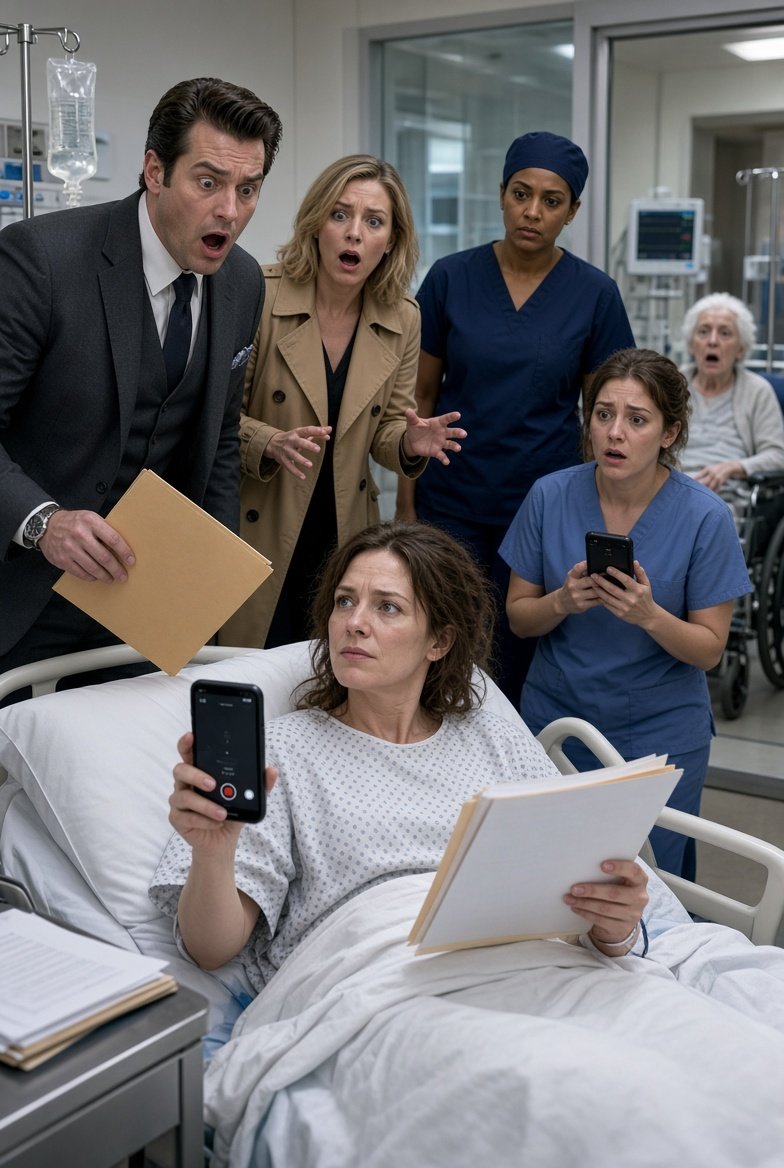
Dr. Priyanka Oay stood at the foot of my gurney, her arms crossed over her chest, her dark face set in lines of granite. On the rolling metal cart beside her, Raina’s phone lay face up.
For the third time, the recording played:
“Let’s just get the kidney out of her first. Worry about the paperwork after she’s sewn up.”
Dr. Oay reached down and tapped the screen, cutting Thad’s laughter short. The silence in the room was absolute, save for the rhythmic, mechanical beep of the cardiac monitor attached to my finger. My pulse was ninety-eight. Steady. Rising, but clear.
“Coraly,” Dr. Oay said, her voice dropping into that deep, immovable register of clinical authority. “Under the laws of the Commonwealth of Virginia, and under the ethical bylaws of the United Network for Organ Sharing, a living donor’s consent must be absolute, informed, and uncoerced at every second prior to the administration of general anesthesia.”
She took a step closer, looking directly into my eyes.
“If there is fraud, if there is duress, if there is exploitation, this procedure halts immediately. I can wheel you out of this department right now. I will call hospital security. I will have your husband and his family escorted from the property, and we will file an immediate report with the state licensing board.”
I sat in the paper gown. The fabric was cold against my shoulders.
Every instinct of a wounded animal screamed at me to take that option. To leap off the table, scream into the hallway, throw the recording in Thad’s smug, handsome face, and watch his aristocratic mother choke on her own venom in front of the entire surgical department.
And then, the chemistry teacher took over.
I thought about the properties of an explosion. If you ignite a pocket of methane in an open field, it makes a loud, terrifying bang. It singes the grass. It scorches the air. And then the gas dissipates into the atmosphere, leaving the earth largely unchanged. The Bromels were creatures of the open air; they had millions in the bank, legions of society lawyers, and four generations of reputation. If I screamed now, Thad would have his crisis PR firm on retainer within sixty minutes.
They would claim the recording was an out-of-context joke. They would say Thad was under unbearable stress. They would call me hysterical, vindictive, an unhinged daughter-in-law who weaponized an organ to destroy an ailing matriarch. Oteline would play the tragic, frail saint, and the city of Richmond would nod sympathetically and agree that Thad had married beneath himself.
No.
To destroy a substance entirely, you do not detonate it in the open. You compress it. You seal it inside a vessel where its own pressure becomes its undoing. You let the reaction run until the vessel tears itself apart from the inside.
“Dr. Oay,” I whispered, my voice shockingly level. “What happens if we stop the surgery, but we don’t tell them?”
The surgeon blinked. For the first time, her professional mask slipped, revealing genuine shock. “Excuse me?”
“You are my physician,” I said, leaning forward. “My medical records, my surgical status, and my physical person are protected under federal privacy laws. Are they not?”
“They are,” Dr. Oay said slowly. “Strictly protected.”
“If I withdraw my consent to donate to Oteline Bromel today, she cannot receive my kidney. Correct?”
“Correct. The transplant is dead.”
“And if you inform the family that there was an unforeseen medical complication—that I am in recovery, but due to surgical protocol, no visitors are allowed until tomorrow morning—what happens?”
Dr. Oay’s sharp mind caught the thread instantly. She looked from me to the phone on the tray, then back to my face. A slow, terrifying glint of comprehension dawned in her eyes.
“They believe the harvest succeeded,” she whispered.
“They believe they won,” I corrected her. “They believe I am lying upstairs with eight inches of fresh stitches in my flank, too weak, too doped on Dilaudid to read what they put in front of me. They will bring the trap they set for me… and they will step directly into it with both feet.”
Dr. Oay stood motionless for five full seconds.
“It is a violation of hospital decorum to mislead a patient’s family regarding procedural completion,” she said, her voice completely flat. Then, she reached out, took the clipboard from the wall, and clicked her pen. “However, as the attending surgeon, I am fully authorized to delay post-operative family consultations if I determine that the recipient’s family poses an immediate psychiatric or physiological threat to the donor’s stabilization.”
She looked at Nurse Alcott.
“Raina,” Dr. Oay said without turning her head. “Transfer Mrs. Bromel to Room 514 in the private surgical recovery wing. Flag the chart as Restricted Access – Medical Hold. Log her as resting post-procedure. No family calls. No entry until nine o’clock tomorrow morning.”
“Yes, Doctor,” Raina whispered, her eyes shining.
“And Coraly?” Dr. Oay looked down at me, her expression dead serious. “Get yourself an attorney. A vicious one.”