
Chapter 2: Echoes in the Concrete
The silence following Julian’s confession felt heavy enough to shatter my spine. His father, Richard Hale, had been a titan of Chicago real estate—a ruthless developer who paved over the city’s history to build luxury high-rises. And my father, a subcontractor for a modest steel firm, had disappeared in the belly of Richard’s empire.
Julian confessed that he had uncovered the connection just weeks before our wedding, fifteen years ago. He had chosen to sleep beside me, watch me weep on the anniversary of the disappearance, and fund my mother’s meager lifestyle, all while harboring the ghost of my father in his closet.
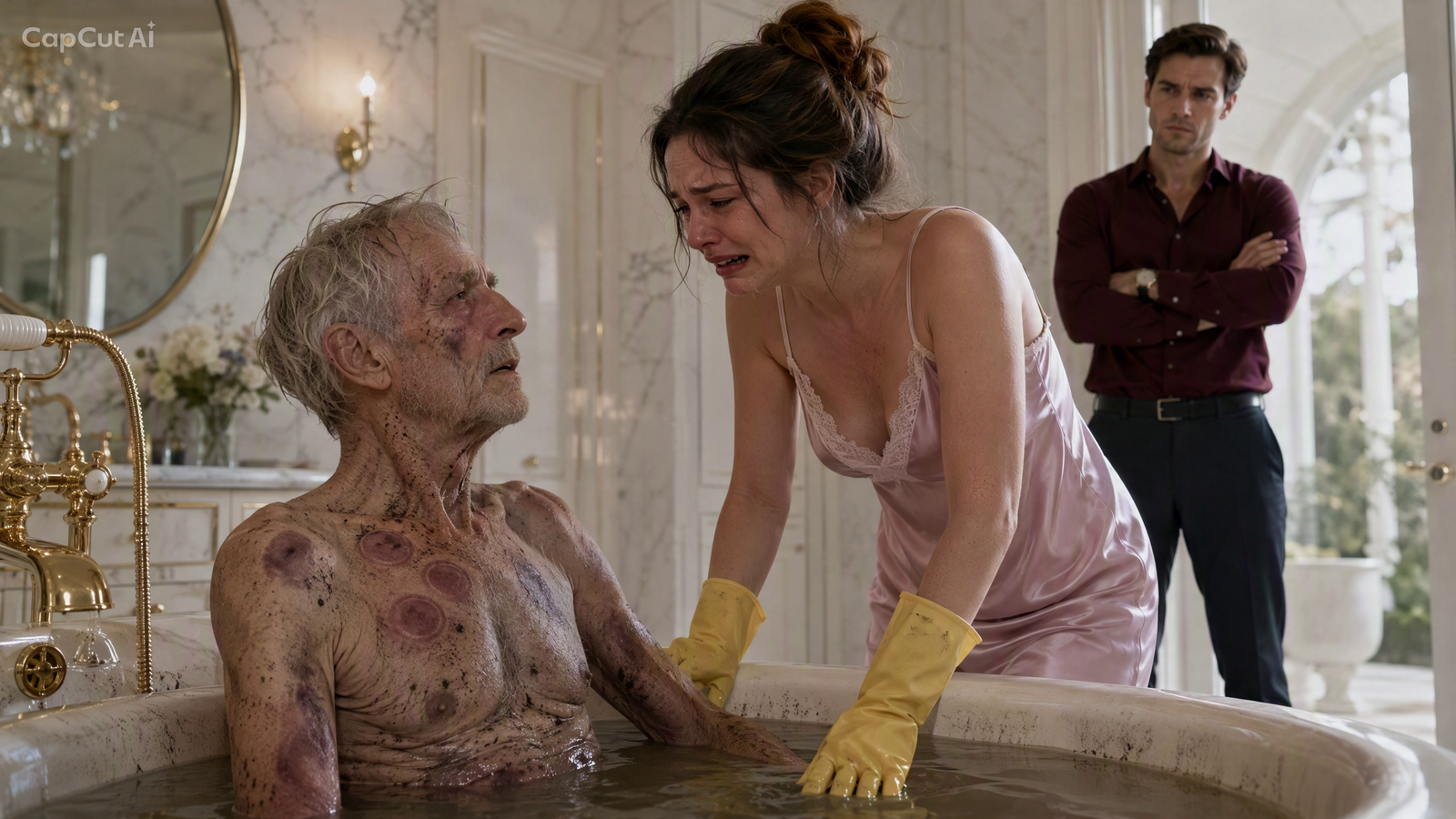
But anger had to be deferred; the fragile man in our guest suite required attention. Julian quietly arranged for Dr. Evelyn Park, a premier neurologist specializing in traumatic amnesia, to visit the estate under a strict non-disclosure agreement.
Dr. Park examined him for hours. “Physically, he is battered but resilient,” she concluded, adjusting her glasses in our sprawling mahogany library. “Neurologically, the memory loss is profound, likely a cocktail of blunt head trauma and severe psychological dissociation. However, procedural memory remains. He knows how to be human, even if he doesn’t know who he is.”
To erase all doubt, a DNA test was fast-tracked. Julian threw his wealth at the laboratory, and twenty-four hours later, the PDF arrived on my tablet.
Probability of parentage: 99.9987%.
I stared at the glowing pixels until they blurred. Mateo Serrano was alive. He was sleeping down the hall.
Over the next week, we tried to rebuild a man from fragments. Washed, trimmed, and dressed in cashmere, he looked less like a phantom and more like the faded photographs I had hoarded. He even rubbed his thumb aggressively against his index finger when anxious—a nervous tic my mother used to tease him about, claiming he was grinding invisible coffee beans.
When I showed him a picture of my mother holding a strawberry cake, he touched the glossy paper with a trembling finger. “She hated strawberries,” he whispered, a tear leaking from his eye. “Allergic. But she’d eat them anyway to be polite. God… I loved her.”
It was the most joyous, heartbreaking moment of my life. Yet, a shadow lingered over our miraculous reunion. Julian was behaving erratically, locking himself in his home office, making hushed satellite calls.
On the fourth night, I caught him. I shoved open his office door at 1:00 AM to find him standing before the roaring fireplace, watching documents curl into black ash. I lunged forward, snatching the brass poker from the stand and stabbing at the flames, managing to salvage a single, half-charred corner of paper.
The Hale Urban Development logo stared back at me. The date was December 16th—the day before my father vanished.
“What is this?” I snarled, brandishing the smoldering paper.
Julian’s shoulders slumped in defeat. “A suppressed safety report. My father’s firm was utilizing substandard, cheap structural steel supplied by a shell corporation he secretly owned. Your father’s company was hired to inspect it. Mateo discovered the load-bearing components were rigged to fail laboratory tests. He tried to blow the whistle.”
The pieces slammed together with sickening clarity. Mateo hadn’t had an accident. He had uncovered a fraud worth tens of millions, orchestrated by my father-in-law.
Fueled by a desperate need for the full truth, Mateo begged us to take him to the original site. The unfinished industrial park had long since been demolished, replaced by a sleek tech campus, but one original brick storage warehouse remained intact on the perimeter.
Julian, looking physically ill, used his limitless influence to bribe the security guards. We descended into the damp, concrete basement of the warehouse.
Mateo’s breathing turned erratic the moment the stale air hit his lungs. He walked like a man possessed, his hands grazing the cold cinder blocks until he halted abruptly before a seemingly random stretch of blank wall.
“Here,” he whispered, his fingernails clawing desperately at the plaster. “I hid it here. In case they killed me.”
Julian wordlessly retrieved a heavy sledgehammer from a nearby maintenance cart. With brutal, echoing swings, he shattered the drywall, revealing a hollow cavity between the older brickwork. Reaching into the dust, Julian extracted a heavily corroded metal lockbox.
Inside, wrapped in layers of plastic, were original inspection reports and a primitive microcassette recorder.
I pressed play. My father’s younger, vibrant voice filled the damp basement, detailing Richard Hale’s bribery attempts, the threats against my mother, and his intent to send the evidence to the federal authorities.
Then came the final recording. December 17th.
My father’s voice sounded breathless, cornered. Metal crashed in the background. Someone was shouting. “I’ve hidden the originals in Building C,” Mateo gasped into the microphone.
Footsteps echoed. Then, a second voice entered the fray. A youthful, shaking, but distinctly familiar voice.
“You need to leave. Now. My father knows you’re recording him.”
The basement grew colder than a tomb. I slowly turned my head to stare at my husband. The color had completely vanished from Julian’s face. He looked exactly like the terrified nineteen-year-old boy on the tape.
Cliffhanger: The tape continued to roll, capturing the sound of Richard Hale arriving, a violent physical struggle, a sickening crack of a steel flashlight against bone, and Julian’s silence as he watched my father fall.