
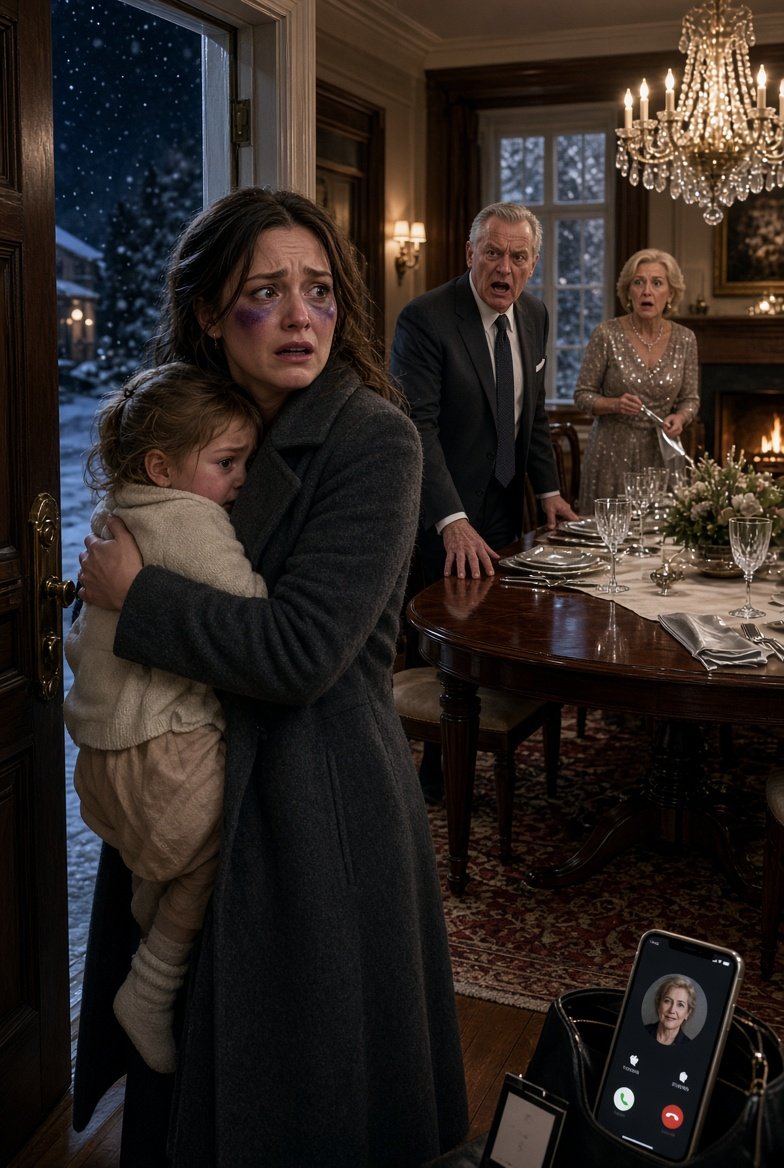
Chapter 5: The Masterpiece of Scars
Two years have passed since the New Year’s Eve that shattered my world.
I did not miraculously inherit a vineyard, nor did I stumble into a whirlwind romance to save me. Salvation, it turns out, is mostly composed of exhaustion and stubbornness. I kept working my contract drafting job. I learned the new software late at night while Lily slept. Slowly, methodically, my reputation in the industry recovered. Medical park renovations led to historical building restorations. Last month, I signed a contract to lead the architectural redesign of the city’s oldest theater.
The first massive deposit from my new firm cleared on a rainy Tuesday. I sat at my battered kitchen table—in a slightly nicer, but still rented apartment—and stared at the numbers on my screen. It was more money than my father had made in his final year of business. It was mine. No one could threaten to withhold it. No one could use it to command my obedience.
I bought Lily a new bicycle with a basket, and I bought myself a twenty-dollar bottle of Cabernet. Freedom, I discovered, has a spectacular vintage.
My relationship with my family remains a scorched earth. My parents downsized to a small condo after Julian’s money vanished. Simon avoided jail by cooperating with the auditors, but he works a grueling, low-paying job out of state now. My mother still occasionally leaves tearful, guilt-laden voicemails on holidays, accusing me of abandoning the family. I listen to them, acknowledge the twinge of sorrow, and then I press delete. Their emotions are no longer my mortgage to pay.
Victoria and I speak occasionally. She remains a titan, having stabilized the company after Julian’s ousting. We are not friends, but there is a profound, silent respect between two women who survived the wreckage of the Vance men.
It is New Year’s Eve again. I am thirty-eight years old.
Lily and I are in our living room. It is small, but it is warm. The radiator does not scream. We have a modest pine tree set up by the window, covered in an aggressive amount of tinsel and handmade paper ornaments that look structurally compromised.
Lily, now a vibrant six-year-old, stands on her tiptoes, holding a fragile, painted glass bauble she made at school. She reaches for a branch, her tongue poking out of the corner of her mouth in deep concentration. She hangs it on a limb that is entirely too weak. The ornament slides down, tilting sideways, nearly falling off.
My hand twitched. Instinctively, I reached out to fix it. I could hear the ghosts of my past whispering in my ear. Straighten it. Make it perfect. Fix the flaw before anyone sees it.
I stopped my hand mid-air.
Lily stepped back, admiring her chaotic handiwork. She tilted her head, looked at the crooked, precarious ornament, and beamed.
“It’s perfect, Mommy,” she declared.
I looked at her, my beautiful, unburdened child, who did not flinch at loud noises, who did not tiptoe around a tyrant’s moods. I lowered my hand and pulled her into a tight embrace, burying my face in her hair.
“Yes, baby,” I whispered, the ghosts finally fading into the silence. “It is absolutely perfect.”
For years, I was told that strength was the capacity to endure suffering for the sake of the collective. I know better now. True strength isn’t bearing the weight of a gilded cage; it’s finding the terrifying courage to blow the cage wide open and walk into the storm.
I left the ornament exactly where she put it.
Like and share this post if you find it interesting.