Chapter 1: The Standard of Perfection
The smell of gymnastics never changes. It is a sharp blend of pure white magnesium carbonate chalk, worn foam rubber, and the ozone tang of industrial floor heaters battling the morning draft.
At nineteen, my entire life was calibrated to inches and fractions of a second. The National Gymnastics Institute was not a place built for comfort; it was an incubator for podium finishes. The banners hung high in the steel rafters, bearing names of legends who had stood where I was standing, their youth traded for Olympic metal.
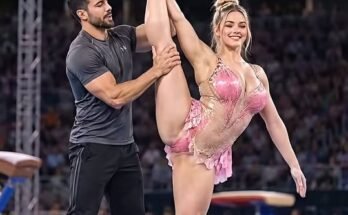
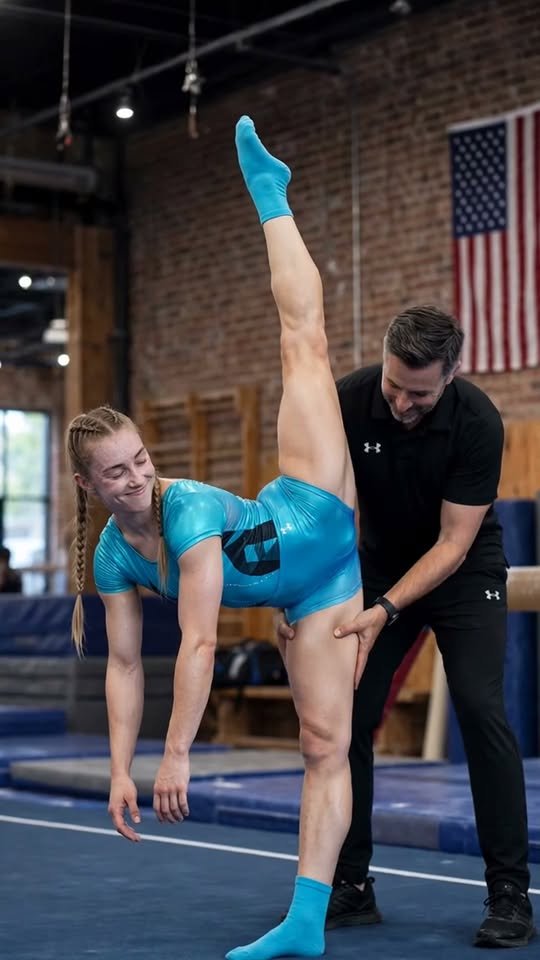
Coach Andrew Miller stood by the perimeter of the blue spring floor, arms folded over a slate-grey institute jacket. He was thirty-two, a former international pommel horse medalist whose competitive career had been cut short by a shattered wrist. He carried himself with the rigid discipline of someone who knew the exact mathematical cost of every hesitation.
“Run it again, Elena,” he said, not lifting his eyes from the stopwatch. “You lost three-tenths on the dismount because your hips were trailing your shoulders.”
“I hit the line,” I replied, breathing hard, sweat stinging the small scrapes on my shins.
“You hit the mat,” Miller corrected calmly, finally looking up. His eyes were light brown, sharp, and entirely focused on mechanics. “Hitting the mat is survival. Hitting the line is qualification. Take five minutes, chalk up, and reset from the round-off entry.”
I didn’t argue. In this gym, Miller’s word was law. He was strict, obsessive about biomechanics, and notoriously aloof. Other coaches laughed with their athletes or allowed music playlists during open floor work. Miller worked in near-clinical quiet, demanding every ounce of focus you had.
What nobody said out loud was why every top gymnast fought to be on his roster: he never let you fail twice at the same mistake.