Chapter 6: The Calculus of Truth
The Voss Family Reunion has been a mandatory Memorial Day tradition for four decades. This year, three long rows of wooden picnic tables were arranged end-to-end beneath the sprawling canopy of walnut trees in Aunt Lorraine’s backyard.
I arrived precisely at noon. As I walked across the grass, the low chatter of eighty relatives faltered, replaced by a heavy, suffocating tension. Eyes darted away from me. Whispers hissed behind plastic cups of lemonade.
Uncle Ray, Grandma’s eighty-seven-year-old brother—a retired pipefitter who had turned his face to the wall when I was handcuffed—marched straight up to me. He didn’t smile, but he extended a calloused hand, shaking mine firmly for everyone to see. It was a silent, profound declaration of neutrality.
I took my seat at the head of the first table, right next to Lorraine. I placed my black tote bag on the bench between us. Two seats down, my cousin Meredith sat quietly, her laptop bag resting against her ankles.
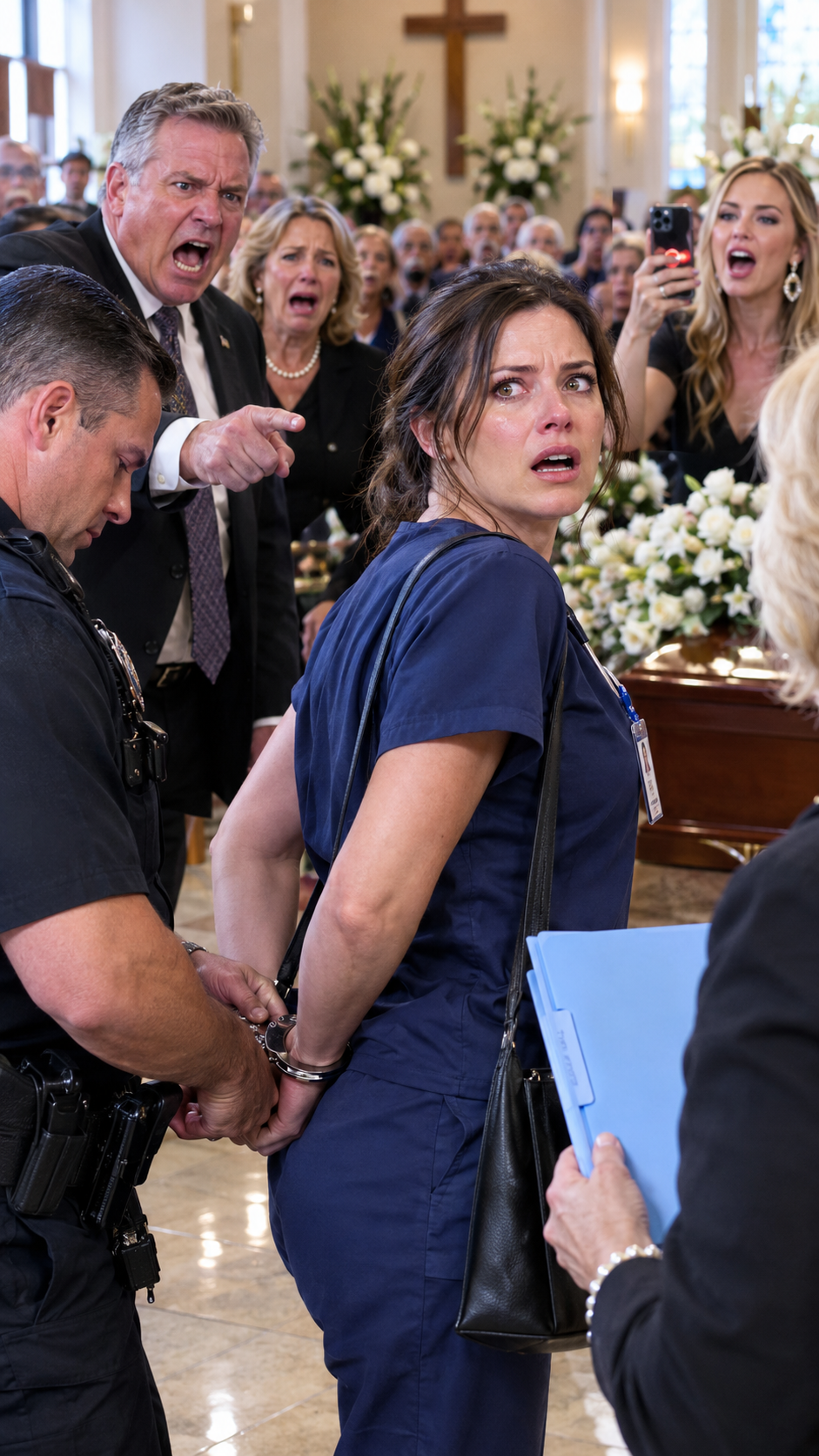
At 12:30, my parents arrived. My mother clutched a thick stack of light blue folders to her chest—photocopies of her doctored bank statements. Brittany trailed behind them, her phone already in her hand, though she wasn’t recording yet.
My father bypassed the pleasantries, walking straight to the PA system Lorraine’s son had set up for the opening prayer. He snatched the wireless microphone.
“Before we break bread,” my father’s voice boomed across the field, echoing off the barn, “this family needs to excise a cancer.”
He paced the grass like a televangelist. “Most of you were at the church. You saw what my daughter did. What you don’t know is that there is a massive, ongoing criminal investigation into her theft, and she is using a forged document to hold my mother’s estate hostage. I am asking all of you to stand with Caroline and me today.”
As he spoke, my mother began dealing out the blue folders like toxic playing cards, slapping them onto the picnic tables.
“The police have her file!” my father bellowed, pointing a furious finger at me. “Ask her why she hasn’t been cleared! Ask her why she’s hiding!”
I stood up. The wooden bench scraped loudly against the dirt.
I reached into my tote bag and pulled out a single sheet of paper. I didn’t yell. I didn’t need to. I walked over and placed the official Kettering Police Incident Report directly onto the table in front of Uncle Ray.
“I’ll let the police answer that,” I said, my voice cutting through the humid air.
Uncle Ray put on his thick reading glasses. He picked up the paper, cleared his throat, and read the disposition line in a booming baritone that carried to the very back tables.
“Disposition: Unfounded. All financial transfers executed under valid, durable Power of Attorney on file. Zero evidence of theft. Case closed, May 8th.”
A shockwave rippled through the crowd.
My father whipped his head toward my mother. “You told me the detective was still building a case against her,” he snarled, the microphone catching his genuine confusion.
My mother froze, the remaining blue folders clutched desperately to her chest. She had lied to him. For the first time in thirty years, the united front was fractured.
But my mother was a cornered animal, and she panicked. “That report says nothing about the ring!” she shrieked, her voice cracking. “She stole Mom’s wedding ring! I was in the room! Mom told me she took it!”
I reached into my bag and pulled out the dark blue velvet box. I snapped it open and placed the gold ring onto the center of the picnic table, right next to the police report. The gold caught the midday sun. Dozens of relatives gasped, leaning forward in their seats.
Next to it, I placed the Heartland Bank access log.
“Box 218,” I announced, projecting my voice. “The bank’s timestamped log. Grandma placed this ring in a subterranean steel vault on February 18th of last year. Nobody opened that box until I did last Wednesday.”
Aunt Lorraine stood up next. She unfolded the hospice affidavit.
“This is a sworn, notarized statement from Renee Dubois, Ellie’s hospice nurse,” Lorraine read, her voice dripping with disgust. “She was standing four feet away on March 14th when Caroline demanded the jewelry. Ellie said, ‘It’s where it belongs.’ She never said Joyce had it. Caroline lied to the Kettering Police.”
My mother’s face drained of color. She looked at my father, begging for a lifeline, but he was staring at the bank log in horror.
It was time for the kill shot. I pulled out the green cloth notebook.
I didn’t explain its origins. I just opened it to January 2022 and began reading.
“January 2022. D. Card: $1,200.” I flipped a page. “March 2022. D. Card: $2,100.” I flipped another. “August 2022. D. Card: $1,500.”
The entire field went dead silent, save for the rustling of the walnut leaves. Eighty people were doing the mental arithmetic in real-time.
I turned to the final page. “January 2025. Total sum: $61,000. And one word, written in Grandma’s hand, underlined twice. Enough.”
I passed the ledger to Lorraine. She held it high so the nearest tables could see the pristine handwriting. “I personally drove your mother to Adult Protective Services,” Lorraine told my father, her voice devoid of pity. “She sat for two hours to file an elder abuse report against you, Dale. She made sure it was in the government system fourteen months before you paraded the police into her funeral.”
My father’s face contorted into an ugly, desperate mask. “She was senile!” he shouted, gripping the microphone so hard his knuckles turned white. “She was confused, and Joyce brainwashed her! Joyce was in that house every day!”
At the second table, Meredith flipped open her laptop. She turned the screen to face the crowd, cranked the volume to maximum, and hit play.
The audio of the church fellowship hall blasted across the lawn. My mother’s theatrical weeping. Brittany’s vicious commentary: Say goodbye to your career, Joyce.
And then, at the nineteen-minute mark, the audio spiked. My father’s hushed, frantic whisper cut through the air like a gunshot.
“Cuff her before she gets to that lawyer of hers.”
Meredith paused the video. My father’s face was frozen on the screen, caught in the act of malicious prosecution.
Sixty-odd people stared at the screen, then turned in unison to stare at the man holding the microphone.
I looked my father dead in the eye. “How did you know I had a lawyer, Dad?”
He opened his mouth, but no sound came out.
My mother, unable to endure a vacuum of silence, blurted out the final, fatal truth. “Because your grandmother threatened us with her! She said if we touched one more dollar of her money, the lawyer would…”
She clamped her hands over her mouth, but it was too late. The words hung in the air, radioactive and undeniable. If we touched one more dollar.
Brittany, sitting two seats away, slowly took her phone and placed it face down on the picnic table. She looked at our parents with a mixture of terror and revulsion.
My father, stripped of his narrative, stripped of his audience, resorted to the only truth he had left. His entitlement.
“That money was mine!” he screamed into the microphone, his voice echoing off the trees. “I am her son! She had two hundred thousand in the bank! I took care of my father’s estate! I was owed that sixty grand! You want to talk about thieves? Ask Joyce why she was hovering around a dying woman every day!”
Nobody answered him.
Eighty people had just heard him demand my arrest in a church to stop me from calling a lawyer he knew existed. Now they were listening to him justify stealing sixty-one thousand dollars from his own mother.
Uncle Ray slowly stood up. He walked over to my father and simply held out his weathered palm. My father stared at it for a moment, defeated, and handed over the microphone.
“Dale,” Uncle Ray said quietly. “Sit the hell down.”
Cliffhanger: The explosion was over, but the fallout was about to permanently alter the geography of the Voss family.