
Chapter 3: The Eleven-Second Sprint
I did not sleep a second.
I lay on my back beside Emmett, watching the yellow glow of the streetlamp filter through the maple leaves outside the window, casting spidery, dancing silhouettes across the ceiling plaster. Beside me, my husband breathed with the deep, rhythmic innocence of an infant. I watched the rise and fall of his ribs—the very chest that had pressed against mine through years of whispered promises—and realized I was sharing a bed with a calculating stranger who was currently engineering my ruin.
I knew that if I confronted him in the heat of the night, if I wept and screamed and demanded justice, I would lose.
They would deny it. Lorna would stage a grand, theatrical seizure of confusion; Emmett would wrap me in his arms and speak in that sickeningly soothing cadence, questioning whether my sleeplessness was finally generating auditory hallucinations. They would turn my sanity against me before the sun even cleared the rooflines.
No, I told myself, feeling an icy, sharp calm settling into my ribs. When an accountant finds embezzlement, she does not alert the thief. She audits the safe.
At six in the morning, the mechanical alarm chimed.
I slid from the sheets, donned my faded cotton robe, and descended the stairs. My movements were deliberately identical to those of the previous two hundred mornings. I illuminated the burner beneath the copper kettle. I measured the rolled oats. I reached into the cupboard and measured precisely one-quarter teaspoon of brown sugar with surgical precision.
When I carried the tray into the dining alcove, Lorna was already seated at the table.
She wore her quilted lilac dressing gown. Her silver hair was artfully mussed, her shoulders slumped in an attitude of decrepit feebleness. Her right hand rested upon the tabletop, vibrating with that subtle, pathetic tremor she had displayed since the dog days of July. She was staring blankly at an antique brass salt shaker, her jaw slack, her eyes vacant and unblinking.
God, what an actress, I thought, bile rising in my esophagus. Eleonora Duse could not have staged it better.
I stepped into the doorway, but I did not immediately announce myself. Through the reflection in the polished glass of the corner china cabinet, I observed her before she registered my footsteps.
Her right hand—the one that supposedly could not hold a fountain pen—moved across the wood with the fluid, steady grace of an archer. She plucked a single crystal of spilled sugar from the polished grain, rolled it between her index finger and thumb, and flicked it effortlessly into her palm. The tremor was non-existent.
Then, she caught the faint creak of my slipper on the threshold.
Instantly, the magic trick resumed: the hand dropped, the spine buckled, and the fingers began their rhythmic, pathetic fluttering against the placemat.
“Good morning, Lorna,” I said, setting the bowl down with a sharp porcelain clatter.
“Ah… morning… child,” she slurred, her speech deliberately thick, her gaze wandering toward the window frame. “Is the… the girl coming today? The girl with the needles?”
“No needles today,” I murmured, watching her throat. “Just breakfast.”
Emmett bounded down the stairs five minutes later, dressed in his crisp corporate polo, smelling of sandalwood aftershave and peppermint toothpaste. He caught me by the waist, pressing a warm kiss to the crown of my head before pouring dark roast into his stainless-steel commuter tumbler.
“I’m running down the I-75 corridor to Cincinnati today, sweetheart,” he declared, checking his gold-plated wristwatch. “Inspecting a major microbrewery kitchen renovation in Over-the-Rhine. I likely won’t make it back before six-thirty or seven. Are you surviving on this front?”
He cast a look of tragic, tender devotion toward his mother, who was currently attempting to maneuver her spoon toward her mouth with exaggerated, trembling difficulty.
“Always,” I answered.
I looked him directly in the pupils and smiled. It was the hardest labor my facial muscles had ever performed in thirty-four years of life. It was a smile made of sheet metal and cold rivets.
“You’re my rock, Ren,” he murmured, squeezing my shoulder before snagging his briefcase from the hall table. “Both of ours.”
The front door clicked shut. His pickup truck groaned to life in the driveway, the tires crunching over the gravel before fading into the morning commuter hum of Dayton.
The clock on the wall read seven-fifteen.
Lorna sat chewing her oats with slow, bovine indifference, her chin dripping a small dot of cream that she left untouched to cultivate the illusion of helplessness.
I stood by the countertop, my fingers curling around the plastic receiver of the landline telephone mounted beside the pantry. I did not pick up the handset. Instead, I pulled my personal mobile device from my apron pocket, hit the speed-dial for the home line, and set the mobile back onto the counter beneath a dishcloth.
Two seconds later, the wall phone chirped its piercing electronic bell.
I answered it immediately. I didn’t say hello. I pressed the plastic shell to my ear, took a theatrical, sharp gasp of air, and let panic saturate my vocal cords.
“What do you mean?” I cried out, my voice shrill and carrying across the small kitchen. “No—this is Renata Vulk! What fraud hold? Which account? You can’t freeze the commercial wire! If Emmett doesn’t sign the affidavit in branch before nine o’clock, the entire transaction is voided? Every single dollar?”
I dropped the handset onto the counter with an intentional, clattering crash, spun on my heel, and made a desperate stride toward the foyer as if racing toward my car keys.
I counted silently under my breath.
One. Two. Three. Four. Five.
Behind me, the dining chair did not scrape backward; it was violently hurled against the wall.
A rushing sound of silk and furious slippers cut through the air. Before I could reach the base of the staircase, an iron grip clamped down upon my left forearm with the terrifying, pneumatic force of an industrial vice. Nails bit straight through my cotton sleeve into the muscle beneath.
“What did they say?”
The voice was not slurred. It was not confused. It was loud, ferocious, articulate, and cold enough to freeze boiling water.
“Which transfer, Renata? Did the lender decline Emmett’s co-signature? Look at me! Did he sign the equity release or not?!”
I did not scream. I did not flinch.
Slowly, deliberately, I halted my momentum. I turned my head and looked down into the face of my mother-in-law.
Lorna stood planted on both bare feet, her spine as rigid as a surveyor’s rod. Her jaw was set, her nostrils flared, and her hazel eyes burned with a razor-sharp, furious intelligence. There was no tremor in the hand that was currently bruising my arm. There was no fog in the gaze that locked onto mine. The mask had not merely slipped; the panic of losing the prize had ripped it completely from her skull.
For five eternal seconds, the kitchen fell into an absolute, cathedral silence.
I did not speak. I simply stared at the fingers digging into my flesh, and then up into her eyes, my face as expressionless and flat as a slab of polished tombstone.
I watched the realization hit her in real time.
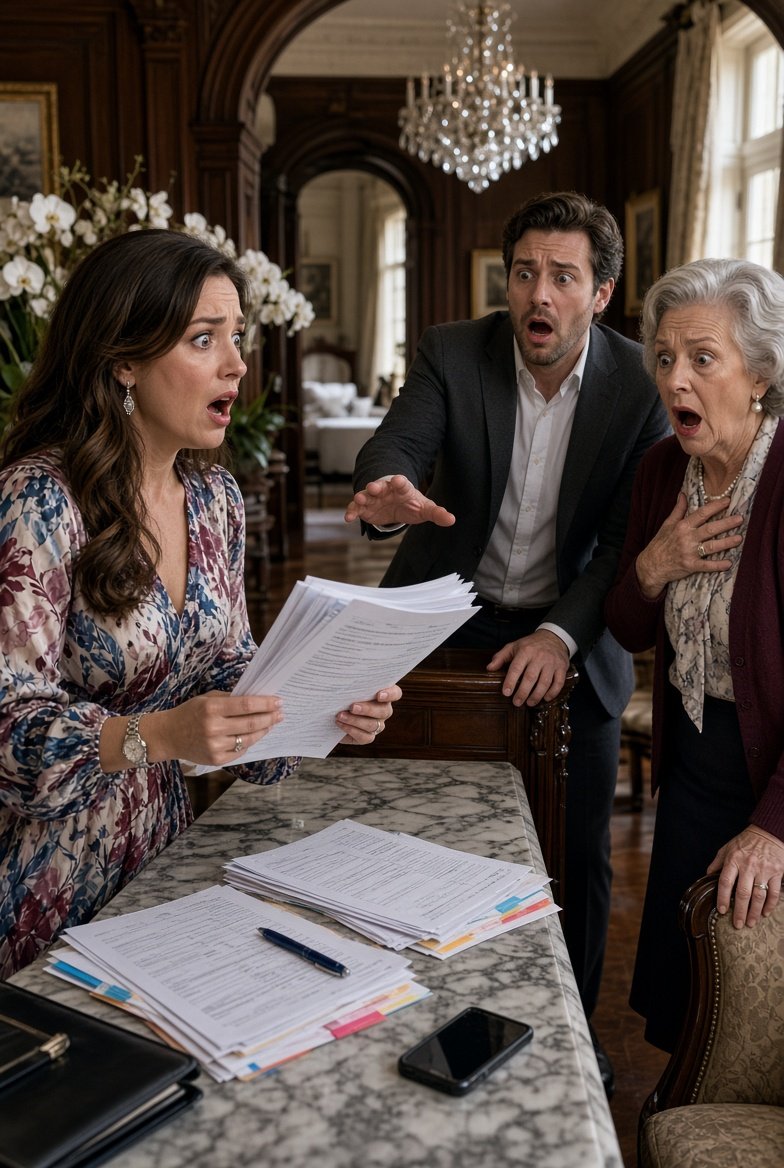
It was an extraordinary, sickening thing to witness. The fire in her pupils suddenly met the cold glass of my indifference. She looked from my face down to the empty hallway, then back to my eyes. She realized there was no bank agent. There was no fraud alert. There was only a thirty-four-year-old woman holding a clean towel, watching her sprint across a room she claimed she couldn’t navigate without a walker.
Her fingers loosened. Her shoulder blades began to dip, her head tilting, her lips parting as she desperately tried to drag the pathetic, confused invalid back over her face like a blanket pulled over a corpse.
“I… I heard you shout, child…” she stammered, her voice attempting to drop back into that hoarse, broken register, the fake tremor instantly fluttering back into her fingers. “The men… the bank men… are they coming here?”
“Save your breath, Lorna,” I said. My voice was very low, very quiet, and steady as an executioner’s blade. “The phone was ringing because I called it from my apron.”
I reached down with my right hand, took her wrist between two fingers, and peeled her grip off my arm, one knuckle at a time.
“The show is over,” I whispered. “I just wanted to see how fast you could run.”