
Chapter 6: The Feast of Reckoning
I spent the late afternoon preparing a pot roast.
It sounds insane, I know. But when the architecture of your reality collapses, the hands crave the mechanical sanity of the familiar. I seared the chuck roast in Ada’s seasoned cast-iron Dutch oven until the crust was mahogany brown. I chopped carrots, yellow onions, and red potatoes into uniform chunks. I deglazed the pan with beef broth and fresh rosemary from the garden.
The house smelled intoxicating—warm, rich, the very essence of domestic security.
Lorna remained confined to her quarters downstairs. She had not dared to emerge. Through the floorboards, I had occasionally heard the muffled squeak of her pacing—the pacing of an imprisoned general who knows the siege lines have closed.
At six-forty, the gravel crunched outside.
The heavy front door swung open, and Emmett strode into the foyer, whistling a jaunty tune. He set his briefcase on the hall table, hung his woolen coat on the brass pegs, and inhaled deeply.
“Sweet lord, that smells like heaven,” he boomed, stepping into the kitchen with that broad, infectious grin that had once made my heart stutter. “Cincinnati was a brutal slog, but the brewery agreed to the entire refrigeration package. We’re turning the corner, Ren. Things are finally going to open up.”
He moved toward me, his arms extending to wrap me in his customary evening embrace.
I did not pull away. I let his chest press against mine. I felt the steady, calm beat of his heart—the absolute lack of remorse, the utter absence of terror. He truly believed he was thirty-six hours away from stealing sixty thousand dollars from the woman whose neck he was currently kissing.
“Sit down, Emmett,” I murmured, sliding out of his reach to ladle the roast onto our grandmother’s white porcelain platters. “Dinner is ready. Go fetch your mother.”
“How has she been today?” he asked, his forehead wrinkling with that rehearsed, theatrical concern. “Any more episodes?”
“She had an extraordinarily active morning,” I replied, meeting his gaze. “Her energy was… remarkable.”
Three minutes later, they sat at Ada’s long dining table.
Lorna sat like a stone effigy, her hands clasped in her lap, her eyes fixed upon her water glass. She had not dressed for dinner; she wore the lilac robe, but her back was straight, her jaw locked. Emmett sat at the head, unfolding his linen napkin, chatting cheerfully about the price of commercial stainless steel and the expansion of the Cincinnati brewery district.
I waited until he had taken three generous bites of the roast. I watched him chew, swallow, and reach for his wine glass.
“Midwestern Heritage Financial called today, Emmett,” I stated casually.
The wine glass paused three inches from his mouth.
It was barely perceptible—a fractional hitch in the rhythm of his breathing, the momentary tightening of the skin at the corners of his eyelids. He was a salesman; he was trained to absorb shocks without breaking his pitch.
“Who?” he asked, chuckling lightly as he set the glass down. “Never heard of them. Sounds like one of those predatory refinancing outfits that spam the mailbox.”
“They weren’t spamming,” I continued, cutting a carrot with my butter knife. “They were calling regarding the co-borrower verification for the sixty-five-thousand-dollar home equity line of credit secured against this house. The one scheduled for disbursement this Friday.”
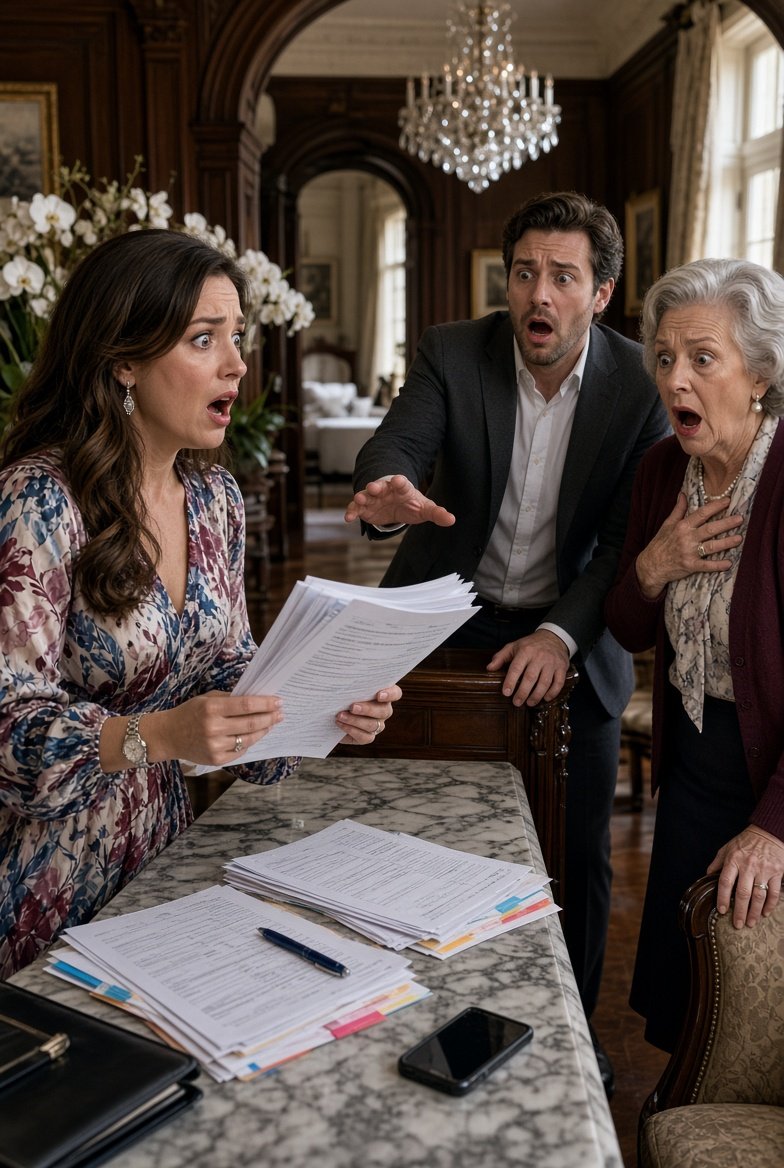
The color did not drain from Emmett’s face; it seemed to curdle beneath his skin, turning a strange, grayish-green under the chandelier light.
Across the table, Lorna did not move a muscle.
“Renata… sweetheart,” Emmett began, his voice dropping into that low, velvet, reasonable cadence he reserved for skeptical diner owners. “You must have misunderstood the representative. That was… that was an insurance inquiry regarding Mom’s long-term care bridge financing. I told you about that three weeks ago, remember?”
“I remember signing the papers,” I said, looking him dead in the pupils. “What I don’t remember is meeting Marcus Vance.”
The name hit him like a physical blow. His fork slipped from his fingers, clattering sharply against the edge of his china plate.
“I called Marcus this afternoon, Emmett,” I lied smoothly. “His storefront on North Dixie Drive is quite quaint. Marcus was terribly distressed when I informed him that I have never been inside his office, have never produced my Ohio driver’s license for his register, and that my signature on that equity addendum was notarized in absentia. Do you know what Marcus said before he hung up the phone? He said, ‘Emmett told me she was bedridden.’”
The silence in the dining room became absolute. The only sound was the low, steady tick of the brass clock in the corner: tick, tick, tick.
Emmett’s eyes darted toward his mother. His polished demeanor cracked, exposing the frantic, cornered beast beneath.
“You spoke to her?” he hissed at Lorna, his voice losing its velvet entirely, turning shrill and ragged. “You said you had her contained! You swore she didn’t know!”
Lorna slowly raised her chin. The look she bestowed upon her only son was not one of maternal sympathy; it was a gaze of withering, monumental contempt.
“I didn’t say a word, you idiot,” she spat, her voice ringing through the room with terrifying, crisp venom. “She baited me with a fake bank transfer this morning, and I took the hook. She’s twice the man you’ll ever be. I told you six months ago her silence was dangerous, but you insisted on playing your ridiculous, smiling salesman routine.”
Emmett rose from his chair so violently that it overturned, crashing onto the hardwood floor.
“Renata, listen to me!” he gasped, rounding the table, his hands outstretched, trembling with genuine, frantic panic. “You don’t understand the pressure I was under! They were going to destroy my career! I did it for us! To protect our standing! The house was never in danger—I had a repayment plan structured through a Delaware shell company! I was going to pay the entire principal back before you ever noticed the statements!”
“With what money, Emmett?” I asked, rising slowly from my seat to tower over him. “The money from the kitchen commissions that don’t exist? The money from the credit cards you maxed out? Or the money you intended to steal from Ada’s accounts next?”
“You can’t do this,” he whispered, tears finally leaking from the corners of his eyes—ugly, terrified tears of self-pity. “Warren Soel called my cell phone twenty minutes ago. He left a voicemail, Renata. He said the loan is dead. He said the sheriff’s department is reviewing the notary records. That’s prison! You loved me! We stood in front of God and your family! You cannot send your husband to a state penitentiary!”
He reached for my wrists, attempting that old, familiar lever—the presumption of my infinite, soft-hearted forgiveness.
“You’re a good Christian woman,” he wept, dropping to one knee upon Ada’s rug, pressing his forehead against my apron. “You took care of my mother when she couldn’t dress herself! You are an angel, Renata! Don’t let them turn you into a monster! Forgive me! Let us work this out like civilized people!”
I looked down at the crown of his dark head—the head I had smoothed to sleep through six winters—and felt a profound, hollow revulsion that scoured every remaining ember of affection from my heart.
“You spent eight months betting your entire life that my goodness was the same thing as stupidity,” I told him, my voice colder than an Ohio blizzard. “You watched me bathe your healthy mother. You watched me cry from sheer exhaustion in the pantry. You kissed my face while you calculated the interest on my ruin. I am not an angel, Emmett. I am Ada Kessler’s granddaughter. And you are trespassing on her property.”
I stepped back, dislodging his grip.
“There are two duffel bags sitting in the foyer,” I said, pointing toward the hall. “One for you, and one for your brilliant bookkeeper. If both of you are not out of this driveway by eight o’clock, the courier from Warren Soel’s office will not wait until morning to deliver Marcus Vance’s signed confession to the county prosecutor.”
Lorna did not weep. She did not beg. She stood up from the table, cast one final, disgusted glance at her weeping son huddled on the floor, and marched toward the front door with her chin held high, defeated only by the weakness of the tool she had chosen to wield.
Ten minutes later, the red taillights of Emmett’s pickup truck disappeared down Hickory Street, swallowed by the October fog.
I stood on the front porch, the autumn wind whipping my hair across my eyes, the cold air filling my lungs until my ribs ached. And for the first time in two hundred and forty days, I drew a breath that belonged entirely to me.